A low-yield well often starts as a small inconvenience. Maybe the shower pressure drops when the washing machine is running. Maybe the garden hose slows to a trickle after a few minutes. Maybe the well seems fine most of the year, but every summer brings the same familiar stress: less water, more waiting, and a growing fear that the well may not keep up.
For many homeowners, the first reaction is to work around the problem. They spread laundry loads across the week, ask family members to take shorter showers, avoid watering the garden, or wait a few hours after heavy use before turning the water back on. These habits may help temporarily, but they do not solve the underlying issue. A low-yield well is not just a lifestyle inconvenience. It can become a costly mechanical problem when the system is repeatedly asked to provide more water than the well can safely produce.
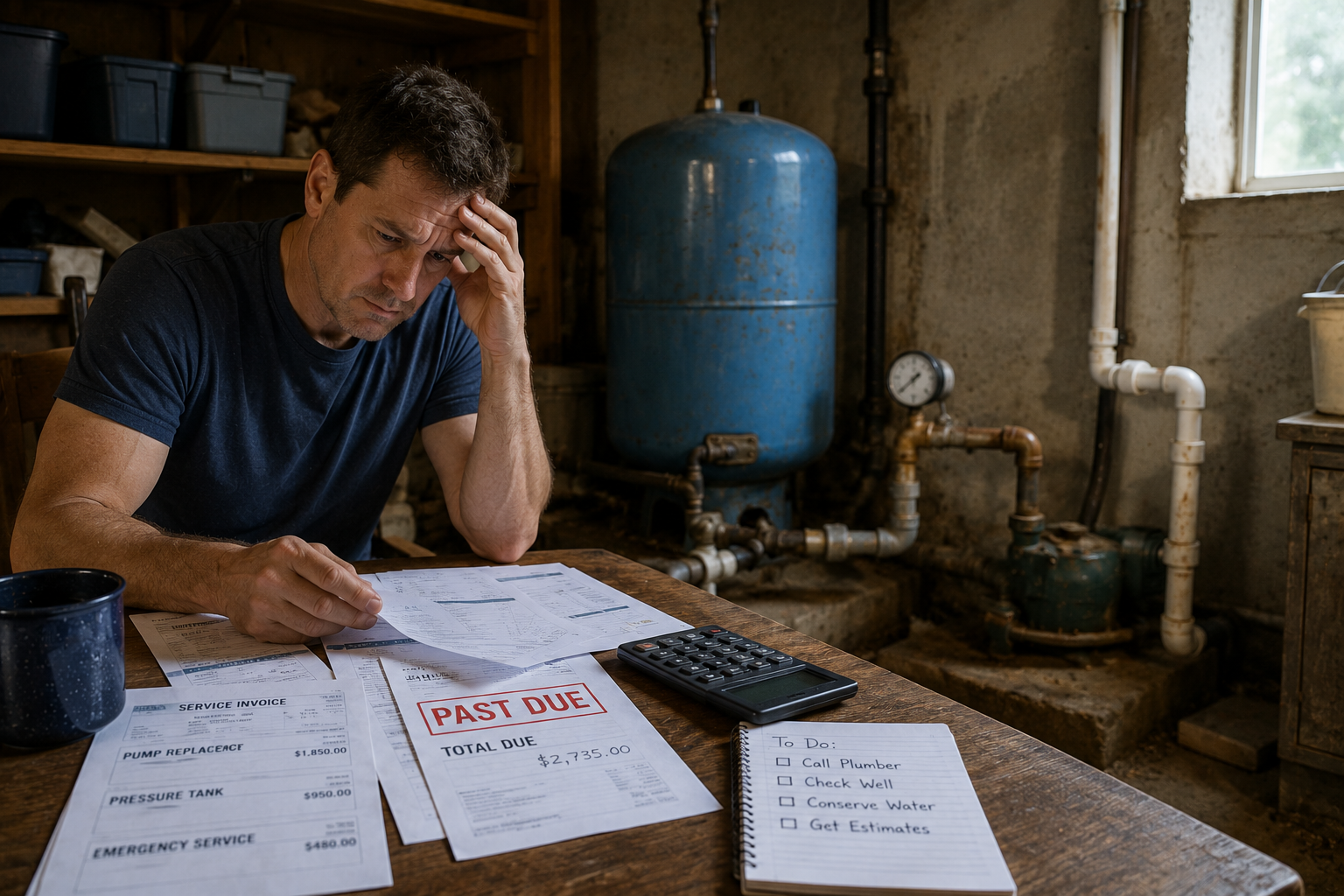
The real cost of ignoring low yield is often much higher than homeowners expect. A well that struggles to recover can put extra stress on the pump, pressure tank, plumbing, fixtures, and the household itself. Over time, that can lead to emergency service calls, premature equipment failure, water deliveries, and eventually the possibility of drilling a new well. By the time the problem feels urgent, many homeowners have already spent thousands of dollars reacting to symptoms instead of addressing the cause.
In this article, we will look at the true cost of ignoring a low-yield well, how repair bills can add up over time, and why proactive low-yield well solutions are usually the smarter investment. We will also explain how the Well Harvester® from Epp Well Solutions helps homeowners work with their well’s natural production rate instead of constantly fighting against it.
What Is a Low-Yield Well?
A low-yield well is a well that produces water more slowly than the household or property needs it. In some cases, the well may only produce a fraction of a gallon per minute. In other cases, the well may produce enough water during quiet periods but fail during peak demand, such as when showers, laundry, dishwashing, irrigation, or livestock watering happen close together.
This is one reason low-yield wells can be confusing. A homeowner may have water in the morning but run out by afternoon. The well may perform fine in the spring but struggle during a dry summer. It may support one or two people but fail when guests visit or when a family’s water use increases. If you want a deeper explanation of what causes these problems, Epp Well Solutions covers the basics in Understanding Low Yield Wells: Causes and Solutions.
A low-yield well does not always mean the well is useless. In many cases, the well is still producing water, just not quickly enough to meet demand in real time. The key is learning how to manage that limited production properly. When water is collected at a sustainable rate and stored for later use, even a low-producing well can often become a dependable water source.
Why Ignoring Low Yield Gets Expensive
The biggest mistake homeowners make with a low-yield well is assuming the problem will stay the same. In reality, low-yield problems often become more expensive over time because every part of the water system is forced to compensate for the well’s limited production.
When the well cannot keep up, the pump may run longer or cycle more often. The pressure tank may work harder to maintain pressure. The pressure switch may engage repeatedly. Fixtures may experience inconsistent flow. The homeowner may begin relying on temporary fixes that cost money but do not improve the long-term health of the well.
This creates a pattern that many rural homeowners know too well. First, the water pressure becomes unreliable. Then a technician is called to inspect the pump or pressure tank. A part is replaced, and things seem better for a while. Then the same problem returns because the root issue was never the pressure switch, tank, or pump alone. The real problem was that the well itself could not keep up with demand.
That is why it is important to look at low-yield wells as a system issue, not just a pump issue. The well, pump, storage, pressure delivery, and household demand all need to work together. Epp Well Solutions discusses several approaches in Comparing Different Low Yield Well Solutions, and the most effective options are usually the ones that manage the well’s natural recovery rate instead of trying to force more water out of it.
Pump Damage: One of the First Major Costs
The well pump is one of the most expensive components in a private water system, and it is often the first major piece of equipment to suffer when low yield is ignored. A pump is designed to move water, not air. When the well level drops too low and the pump continues running, the system can experience dry-run conditions, overheating, and excessive wear.
Even when the pump does not run completely dry, low-yield conditions can still shorten its life. A pump that has to cycle frequently or run under stressful conditions may fail sooner than expected. Homeowners sometimes replace a pump and assume the problem is solved, only to discover that the new pump is being placed into the same difficult operating environment as the old one.
Pump replacement costs vary depending on depth, pump type, labor, and local service rates, but it is rarely a cheap repair. The cost becomes even more frustrating when the pump failure could have been prevented with better well management. A proactive solution that prevents over-pumping can help protect the pump by ensuring it only runs when water is actually available.
This is where homeowners need to be cautious about “bigger pump” thinking. Installing a more powerful pump may seem like an easy way to get more water, but if the well itself cannot recover quickly enough, a larger pump can make the problem worse. Epp Well Solutions explains this issue more in How to Fix a Low Yield Water Well, where the focus is on working with the well’s actual production rather than overwhelming it.
Pressure Tank and Pressure Switch Problems
Low-yield wells do not only affect the pump. They can also create problems with pressure tanks, pressure switches, and the overall delivery system. When a well struggles to provide water consistently, the system may cycle more often than it should. This frequent cycling can wear out components faster and create unreliable pressure throughout the home.
A pressure tank is supposed to help stabilize water delivery by reducing how often the pump turns on and off. However, if the well cannot keep up with demand, the pressure tank may not be enough to solve the issue. Homeowners may replace the tank, adjust the pressure switch, or install new controls, only to find that the underlying shortage remains.
These repairs can be especially frustrating because each one may seem reasonable in the moment. A technician identifies a worn component, replaces it, and restores function temporarily. But if the well continues to be overdrawn, the system is still under stress. Over time, the homeowner may pay for multiple smaller repairs before realizing that the well’s low yield should have been addressed directly.
This is one of the hidden costs of reactive well maintenance. Repair bills do not always arrive as one large expense. They often appear as a steady stream of service calls, replacements, adjustments, and temporary improvements. By the time the homeowner adds them up, the total can be significant.
Emergency Service Calls Add Up Quickly
Losing water is not like losing a luxury feature in the home. It affects nearly everything: bathing, cooking, laundry, cleaning, toilets, pets, gardens, and daily routines. When a well stops providing water, most homeowners need help quickly. That urgency often means emergency service fees, after-hours rates, and limited time to make a careful decision.
Emergency calls are especially common when homeowners ignore early warning signs. A well that sputters, loses pressure, or runs low during peak use is often warning the homeowner before a complete outage happens. Unfortunately, many people wait until the water stops entirely before taking action.
At that point, the homeowner may not have the luxury of comparing long-term solutions. The immediate goal is simply to get water flowing again. That can lead to quick repairs that restore service temporarily but do not solve the low-yield problem. Then the same cycle repeats during the next dry season, family gathering, or high-demand period.
The better approach is to treat early warning signs as an opportunity. If a well is already showing signs of low production, it is usually cheaper and less stressful to evaluate proactive options before the system fails. Epp Well Solutions provides several practical ideas in 6 Solutions for Low Yielding Wells, including approaches that help homeowners avoid waiting until an emergency occurs.
Water Shortages Affect More Than Repair Bills
The cost of a low-yield well is not limited to equipment. It also affects quality of life. When water is unreliable, homeowners begin planning their day around the well. They may avoid running appliances at the same time, limit guests, postpone outdoor watering, or worry every time someone takes a long shower.
For families, the inconvenience can become a constant source of stress. For small farms, hobby farms, and homesteads, the stakes can be even higher. Water may be needed for livestock, gardens, greenhouses, workshops, or rental units. A low-producing well can limit what a property owner is able to do with their land.
This is why low-yield well solutions should be evaluated not only by upfront cost but also by long-term usefulness. A solution that provides dependable storage and pressure can improve daily life in ways that are difficult to measure on a repair invoice. It gives homeowners more flexibility, reduces worry, and allows the property to function normally even when the well itself produces water slowly.
Epp Well Solutions covers this concept in How to Make a Low Yield Well Meet Peak Water Demand. The key idea is that a well does not always need to produce water at the exact moment the home needs it. With the right storage and control system, water can be collected gradually and used when demand is highest.
Drought Can Turn a Manageable Problem Into a Crisis
Many low-yield wells perform differently throughout the year. A well that seems acceptable during wet months may struggle during summer or during extended dry periods. When rainfall is limited and groundwater recharge slows, an already low-producing well may become even less reliable.
This seasonal pattern can create a false sense of security. Homeowners may get through most of the year without serious problems, then face repeated shortages during the driest months. Because the problem appears seasonal, it is easy to postpone action. But drought conditions are exactly when a proactive solution matters most.
When a well is already vulnerable, drought increases the risk of over-pumping, pump stress, and water shortages. A homeowner may respond by using less water, but there are limits to conservation. Families still need water for basic household use. Properties with animals, gardens, or landscaping may have additional needs that cannot simply be eliminated.
Water storage is one of the most effective ways to improve drought resilience. Instead of depending only on real-time well production, the system builds a reserve when water is available. Epp Well Solutions explains this further in How Well Water Storage Can Help During Droughts and Why Well Water Storage is Important.
The Expensive Temptation to Drill a New Well
When a homeowner becomes frustrated enough, drilling a new well may seem like the only serious option. In some cases, a new well may be necessary. If the existing well is dry, damaged, contaminated, or no longer usable, replacement may be the right path. But for many low-yield wells, drilling a new well is not the first solution homeowners should consider.
The biggest problem with drilling is uncertainty. A new well can cost a significant amount of money, and there is no guarantee it will produce dramatically more water than the existing well. Groundwater conditions vary by property, depth, geology, and region. A new well may be better, but it may also produce similar results or introduce new water quality concerns.
Before drilling, homeowners should compare the cost, risk, permitting requirements, and expected outcome against other options. Epp Well Solutions discusses the process in Drilling a New Well: What to Expect and also breaks down current expenses in Water Well Drilling Costs in 2026.
For homeowners with an existing well that still produces water, the smarter question may be: can this well be managed better? If the well can recover slowly over time, a storage-based solution may be able to turn that limited production into a reliable household supply without taking on the cost and uncertainty of drilling.
Why Basic Storage Tanks Alone May Not Be Enough
Adding a storage tank can be a major step in the right direction, but storage alone does not always solve the full problem. A tank provides reserve capacity, but the system still needs to control how and when water is drawn from the well. If water is pulled too aggressively, the pump can still overdraw the well. If the controls are too basic, the homeowner may still need to monitor the system manually.
This is where the difference between passive storage and smart water management becomes important. A simple tank can hold water, but a well management system should also protect the well, manage recovery, prevent dry-run conditions, and deliver pressure when the home needs it.
For some properties, a basic tank may be enough. For low-yield wells with recurring shortages, the best solution is often a system that combines storage with automation. Epp Well Solutions explains the role of storage in more detail in A Guide to Water Storage Systems in 2026 and The Benefits of Modular Water Storage Systems for Well Owners.
The goal is not just to store water. The goal is to create a system that allows the well to recover naturally while still giving the home dependable water pressure and availability.
How the Well Harvester® Helps Protect Low-Yield Wells

The Well Harvester® from Epp Well Solutions is designed specifically for low-producing wells. Instead of forcing the well to deliver water on demand, the system works with the well’s natural recovery rate. It collects water when the well can safely provide it, stores that water, and then delivers it to the home when needed.
This approach solves one of the core problems of low-yield wells: timing. A low-yield well may not be able to supply enough water during a busy morning, but it may be able to produce water slowly throughout the day and night. The Well Harvester helps capture that available water and store it so the household is not limited by the well’s real-time flow rate.
The system also helps protect against over-pumping. By managing how water is drawn from the well, it reduces the risk of running the pump under damaging conditions. That can help extend pump life, reduce emergency repairs, and create a more reliable experience for the homeowner.
For many properties, this is a much more practical solution than repeatedly replacing components or immediately drilling a new well. The Well Harvester is not just a tank. It is an automated well management system built around the reality of low-yield water production. Homeowners comparing options can also read Well Harvester vs. Big Blue Tanks: Which Wins for Low-Yield Homes? for a closer look at how smart automation compares to oversized passive storage.
Repair Bills vs. Proactive Solutions
When comparing repair bills to proactive solutions, homeowners should think beyond the next service call. A single pressure switch replacement may cost less than a long-term system. A single service visit may feel manageable. Even one pump repair may seem like a normal part of owning a well. The problem is that low-yield wells often create repeated expenses.
Over several years, a homeowner may pay for diagnostics, pressure tank repairs, pump replacements, emergency calls, water deliveries, and eventually drilling estimates. These expenses may be spread out, but they all come from the same unresolved issue: the well is being asked to provide water in a way it cannot sustain.
A proactive solution changes the strategy. Instead of waiting for equipment to fail, it manages the well more intelligently. Instead of treating low yield as a recurring emergency, it treats it as a condition that can be planned for. Instead of relying on guesswork, it creates a system designed around the well’s actual production.
This is why many homeowners find that proactive low-yield well solutions are less expensive in the long run. They reduce the chance of major failures, improve daily reliability, and help homeowners avoid making rushed decisions during a water outage.
Warning Signs You Should Not Ignore
If your well is already showing signs of low yield, it is better to act sooner rather than later. Warning signs may include frequent drops in pressure, sputtering faucets, cloudy water after heavy use, long recovery times, pump cycling, reduced flow during summer, or water outages during peak demand. These symptoms often appear before a major failure.
It is also important to pay attention to changes over time. A well that used to support the household but now struggles may be experiencing declining yield, increased demand, equipment wear, drought stress, or changes in groundwater conditions. Epp Well Solutions covers this topic in Fixing a Water Well That Has a Declining Yield.
The sooner a homeowner identifies the pattern, the more options they usually have. Waiting until the well fails completely can limit choices and increase costs. Acting early gives homeowners time to compare storage, well management, rehabilitation, and other solutions without the pressure of an emergency.
The Bottom Line: Waiting Is Usually the Costliest Choice
Ignoring a low-yield well rarely saves money. It may delay spending in the short term, but it often leads to higher costs later. Pumps wear out, pressure systems struggle, emergency calls become more likely, and homeowners may eventually consider expensive options like drilling a new well.
A low-yield well should not be treated as a hopeless problem. In many cases, the well still produces useful water. The challenge is managing that water properly. By collecting water at a sustainable rate, storing it, and delivering it when needed, homeowners can often turn an unreliable well into a much more dependable system.
For property owners dealing with low water pressure, slow recovery, seasonal shortages, or repeated well repairs, the best time to explore proactive solutions is before the next emergency. The Well Harvester® offers a smarter way to work with a low-producing well, protect the pump, reduce stress on the system, and provide the household with a more reliable water supply.
Repair bills may seem smaller one at a time, but they add up quickly when the root problem remains unresolved. A proactive solution is not just about convenience. It is about protecting your well, your equipment, your property, and your peace of mind.