Reliable Water. Even From a Low-Yield Well.
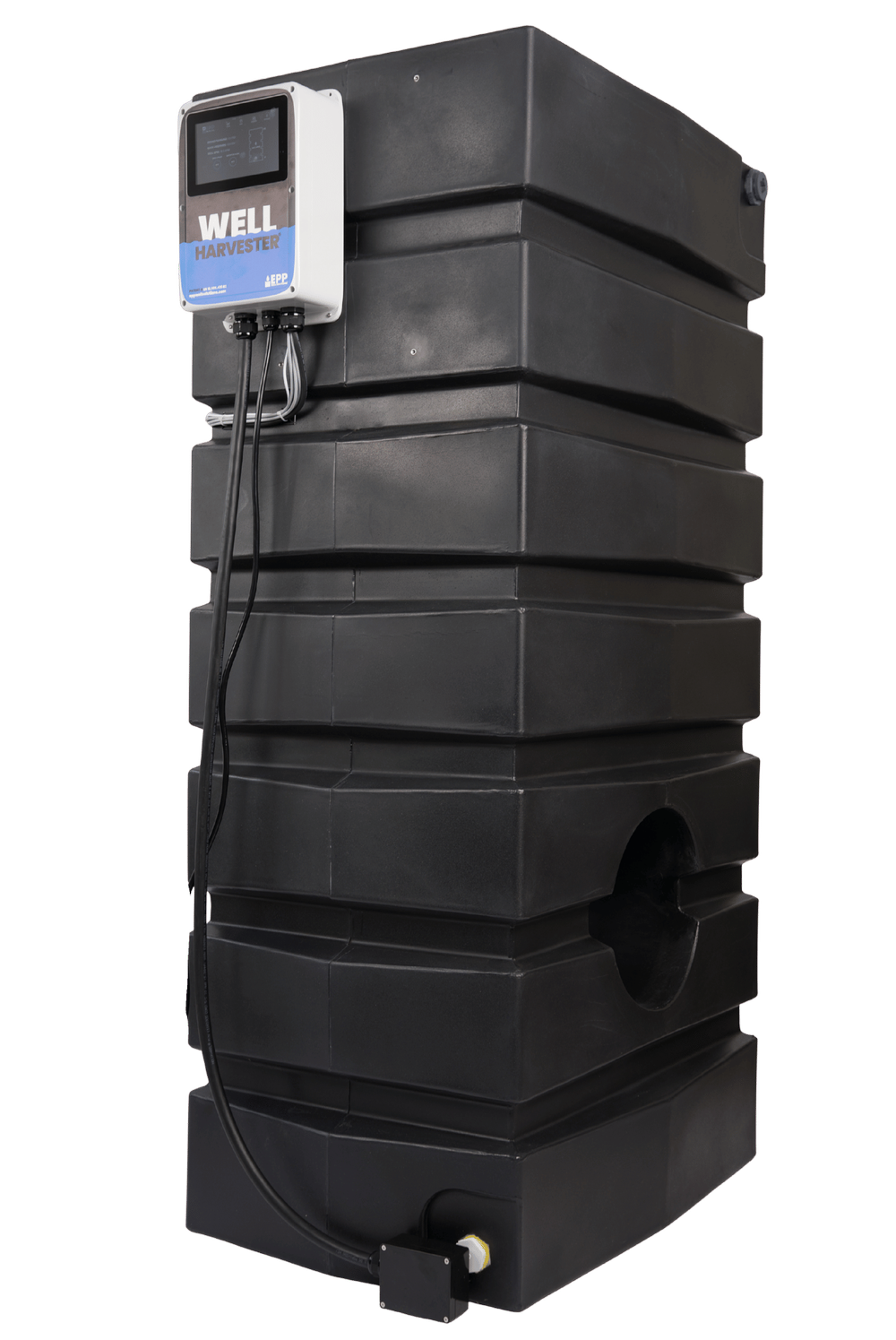
The Well Harvester automatically manages low-yield well production, stores available water, and supplies your home at normal household pressure and flow.
No obligation We’ll help confirm fit and recommend the right storage capacity.
Your Well May Produce Enough Water. Just Not All at Once.
Many low-yield wells produce useful water volume over a full day but cannot keep pace with short periods of high household demand.
Showers, laundry, and other fixtures need water in bursts. Your well may need more time to produce that same amount.
Illustrative maximum at a continuous one-gallon-per-minute rate. Actual well production and recovery vary.
The solution is not forcing the well to work faster. It is storing water before you need it.
Three Jobs. One Automatic System.
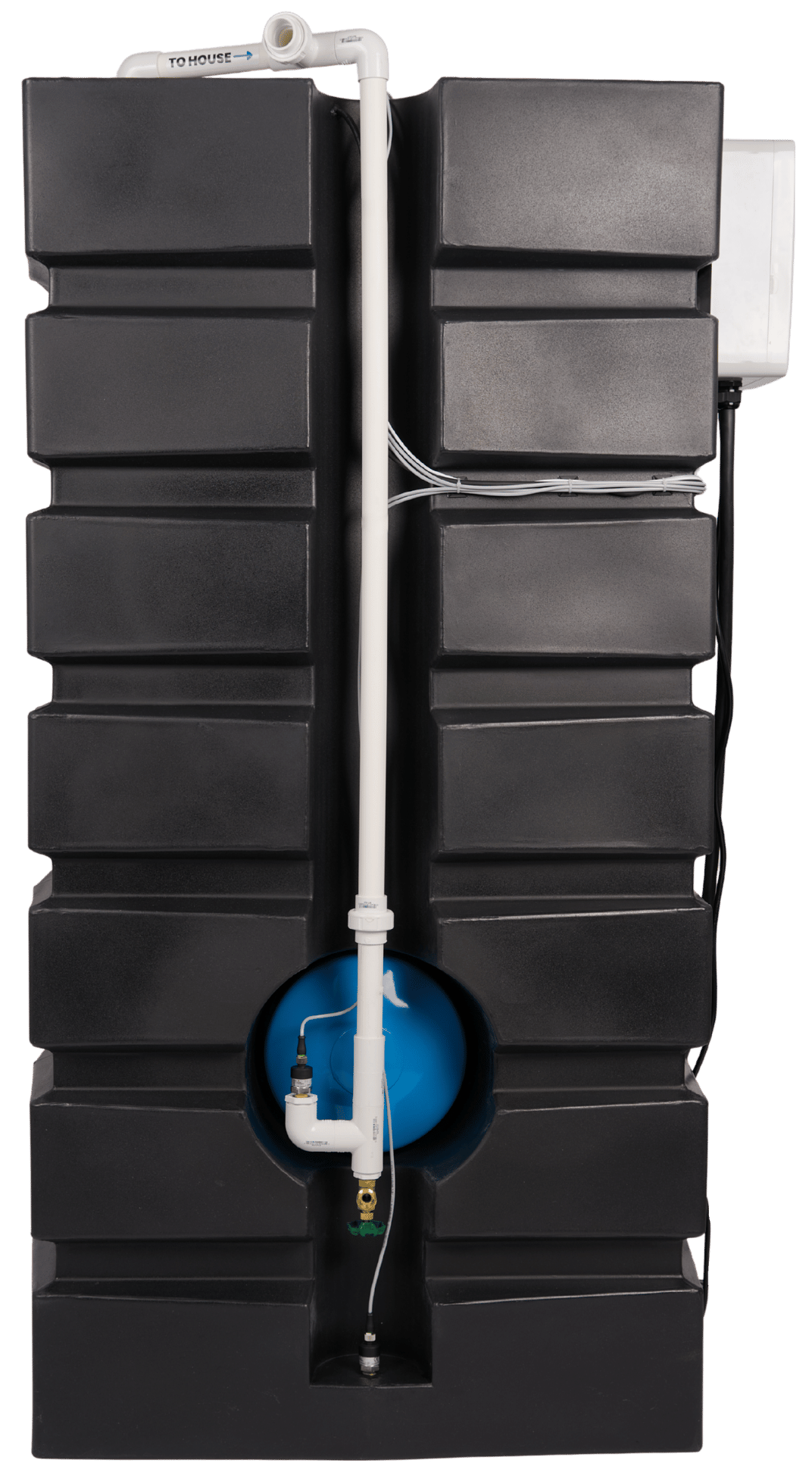
The Well Harvester separates slow well production from peak household demand by coordinating collection, storage, and delivery.
Work with the well’s available flow
Water is collected at a controlled rate as the well produces it.
Build a reserve between peak uses
The standard 215-gallon tank stores water for periods of higher demand.
Deliver whole-home pressure and flow
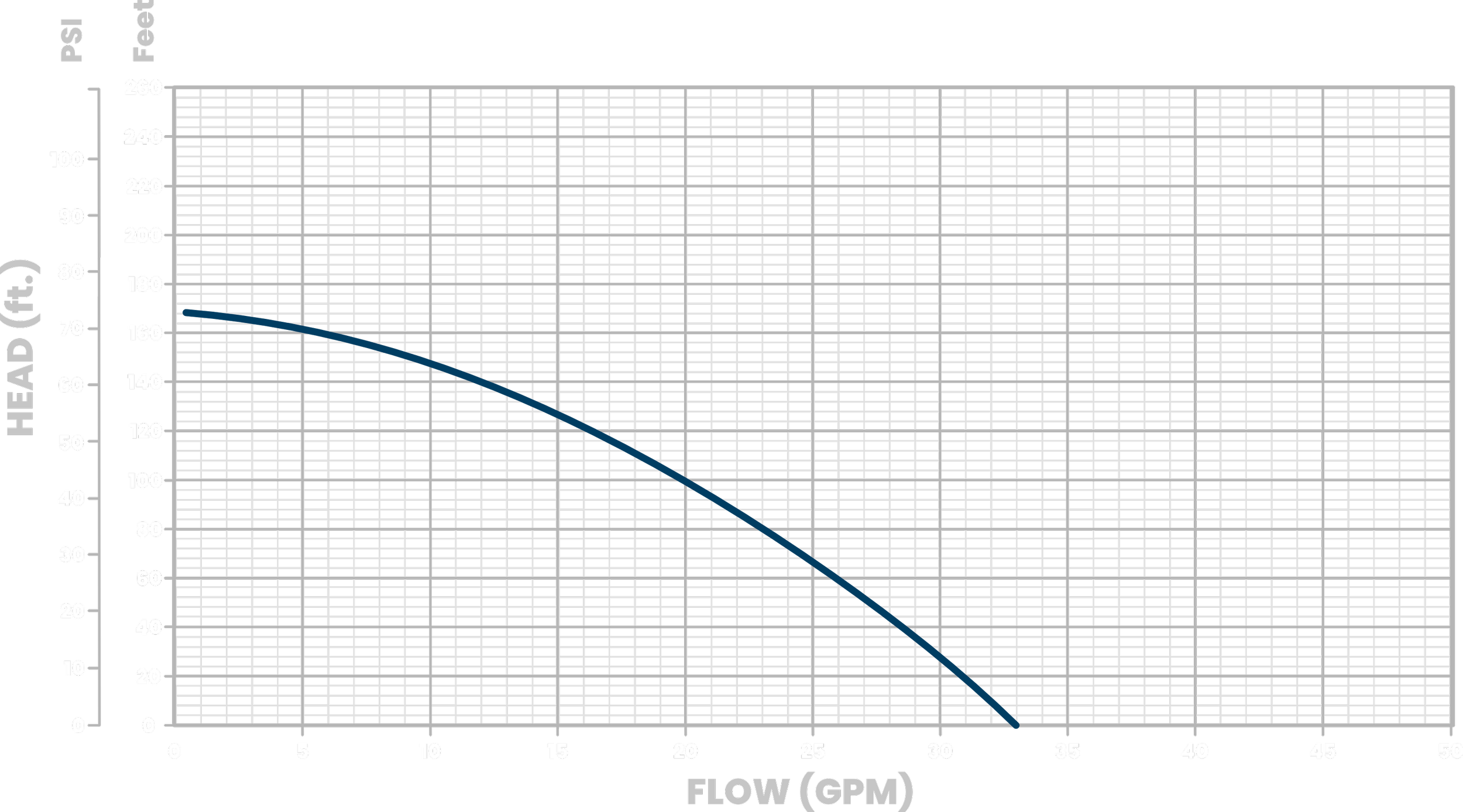
The booster supplies stored water at up to 20 GPM and 60 PSI.
Once configured, it happens automatically. The system manages the exchange between the well, storage tank, and home without constant adjustment.
More Than a Storage Tank.
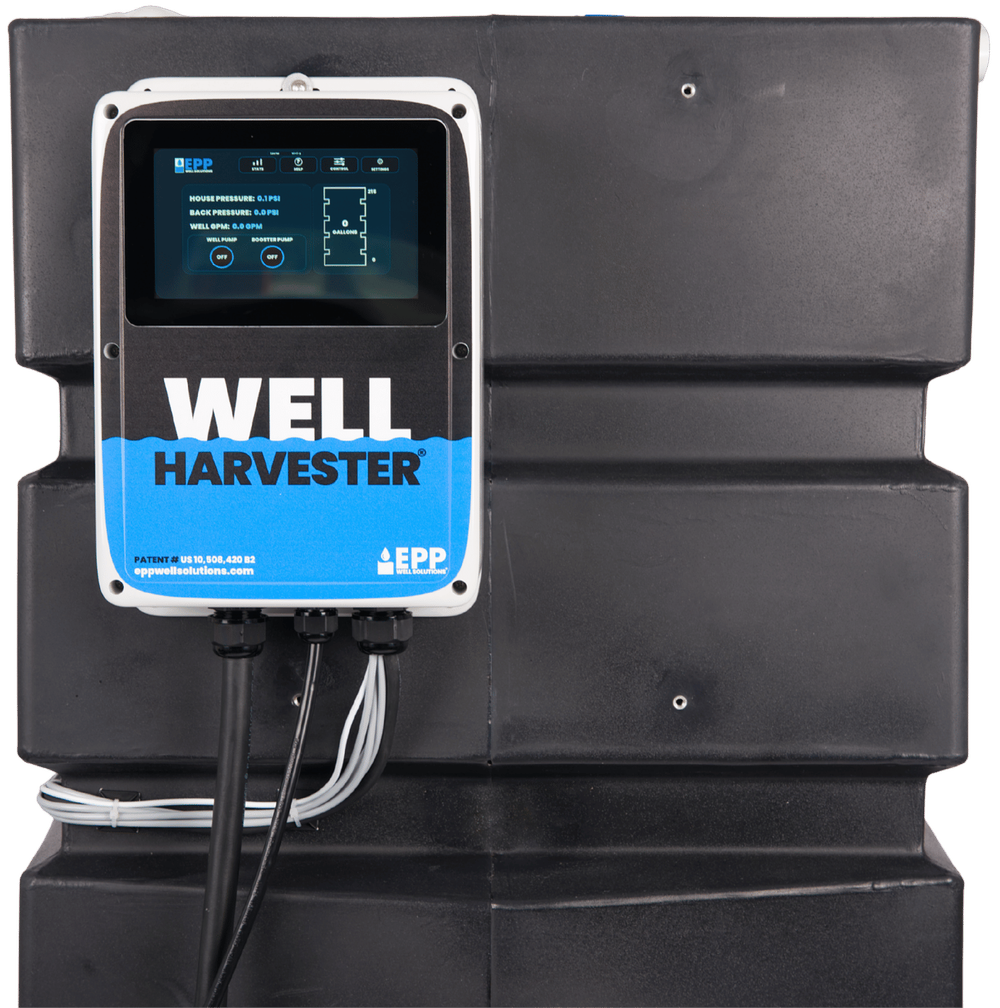
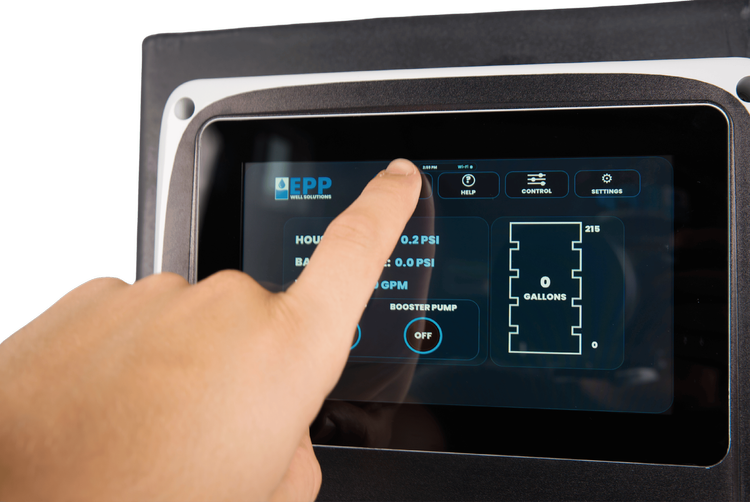
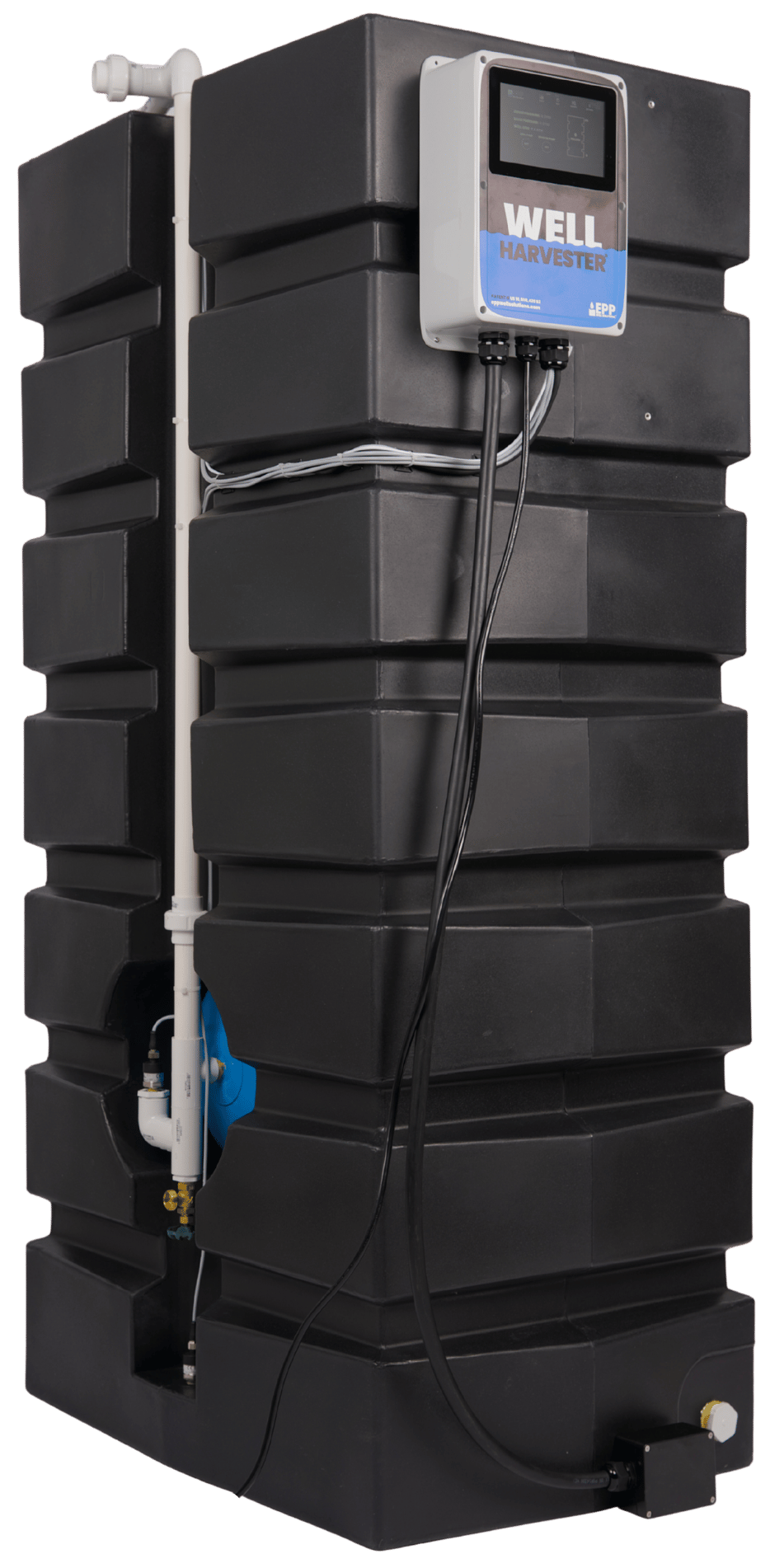
The controller, storage tank, booster pump, and touchscreen are built to work together—from collecting available well water to supplying your home.
Automatic Well Management
Adjusts how water is collected as well conditions change.
215 Gallons Standard
Builds a potable-water reserve as your well produces.
Whole-Home Pressure + Flow
Supplies up to 20 GPM at 60 PSI from stored water.
Controls at the System
Check tank level, well flow, pressure, and system status.
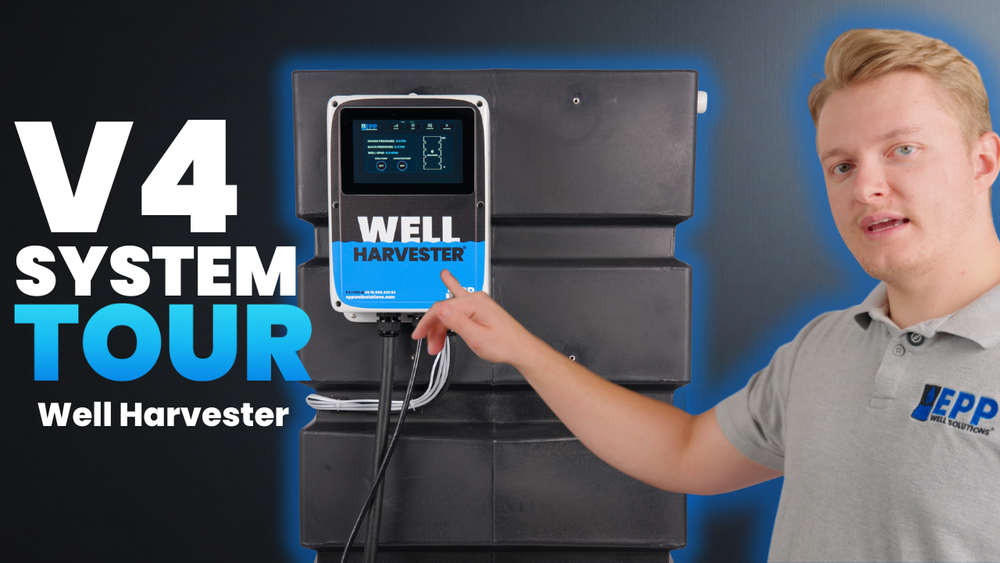
Smarter Control. More Visibility.
Check the water information that matters at a glance. Local app access is included, while optional Cloud Access lets you monitor, control, and receive alerts when you are away from home.
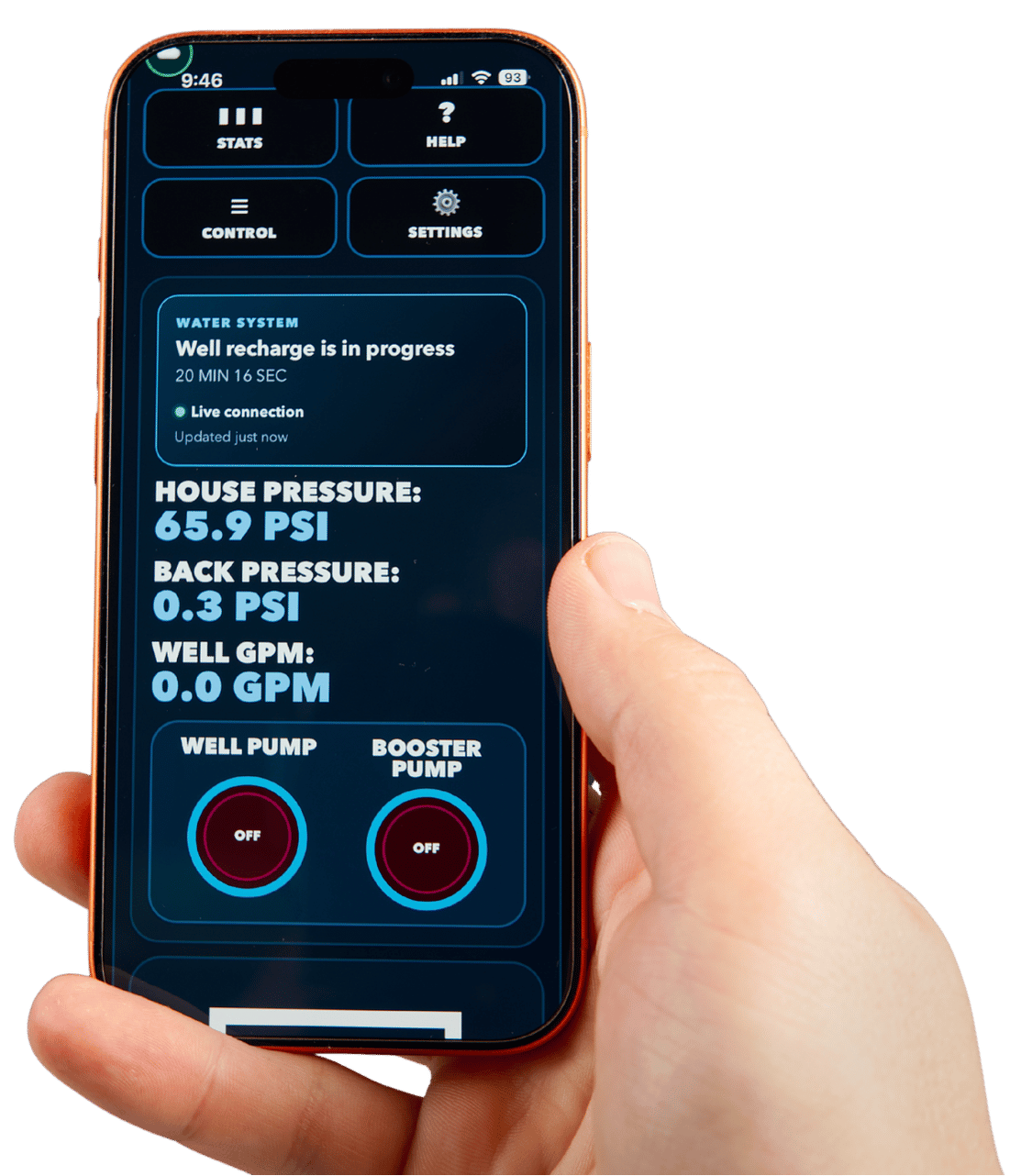
Your water system, made easy to understand.
- Tank Level
- House Pressure
- Well Flow
- System Status
The system automatically updates, helping keep the Harvester controller current.
View live system information and use controls while connected to the same network as your Well Harvester.
Add monitoring, controls, and notifications when you are away from home.
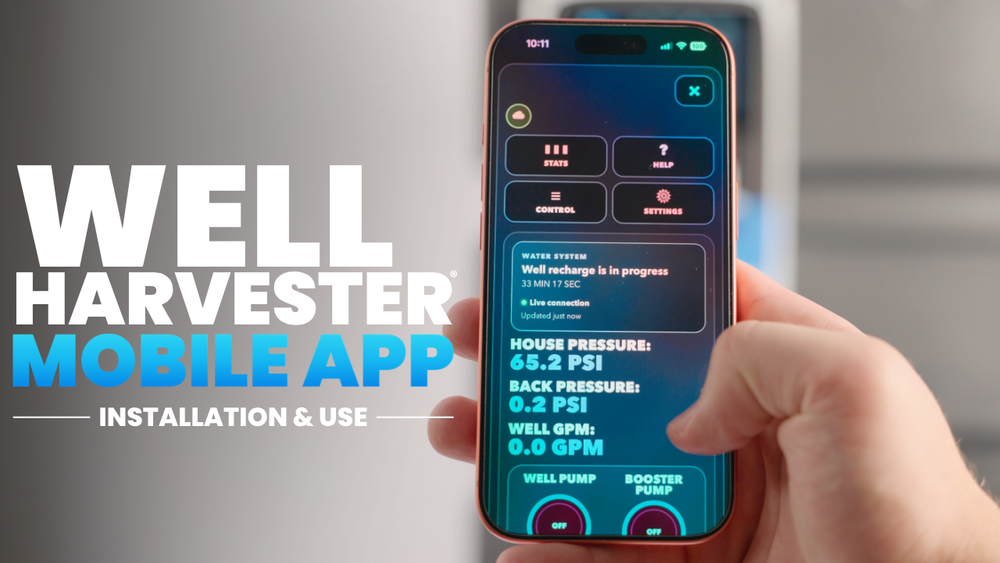
Set Up & Use the Mobile App
See how to get connected and use the Well Harvester app.
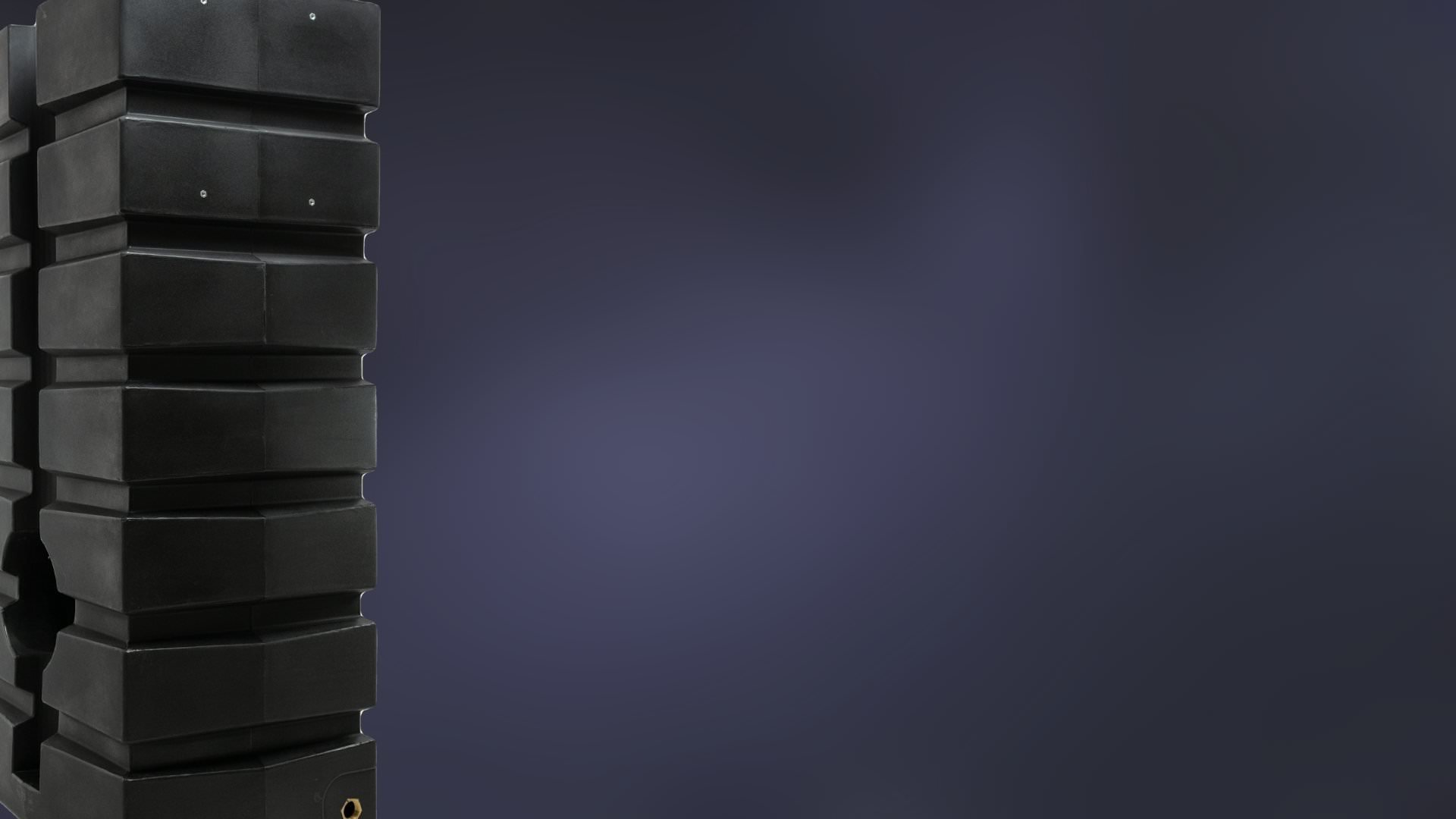
Well Harvester Specifications.
The essential capacity, pressure, electrical, dimensional, and compatibility information for planning your installation.
- Tank Capacity
- 215 gal
- Booster Output
- Up to 20 GPM
- Water Pressure
- 60 PSI
- System Voltage
- 120V
System Details
Open a category to view its specifications.
Electrical
- Well-Pump Voltage
- 120V–240V
- Operating Power
- 1,600 W
- Startup Power
- 2,700 W
Size & Shipping
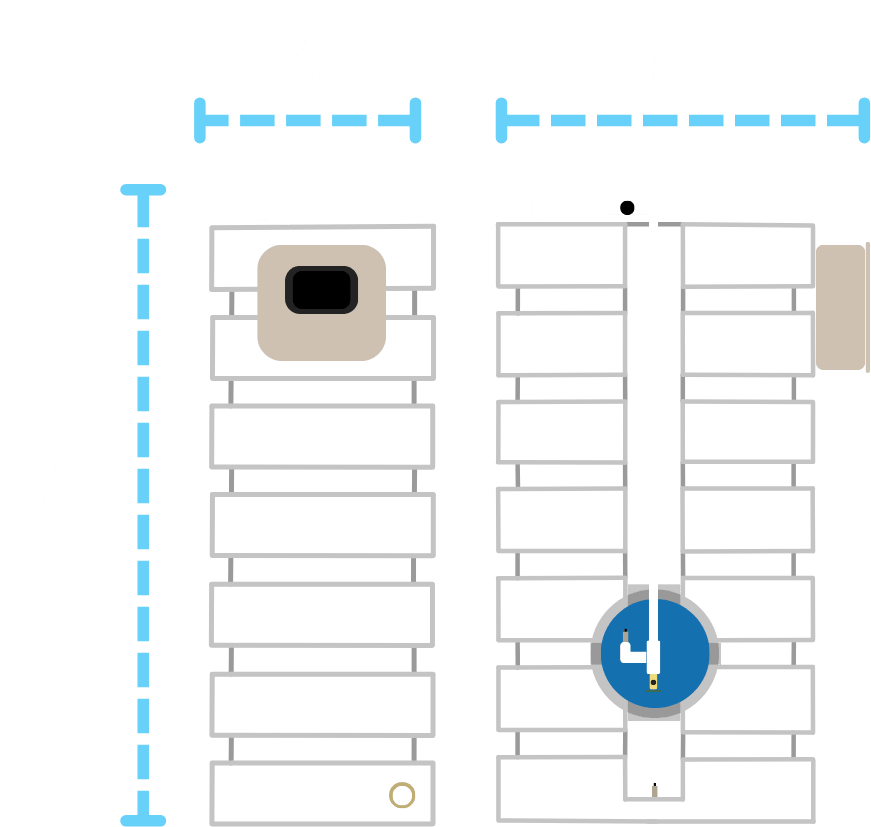
- System Size
- 26″ × 43″ × 73″
- System Weight
- 190 lb
- Palleted Size
- 29″ × 45″ × 79″
- Packaged Weight
- 220 lb
- Operating Range
- 33°F–104°F
Compatibility & Coverage
- Well Pumps
- Submersible
- Jet Pumps
- Beta
- Warranty
- 3 years
- Patent
- US 10,508,420 B2
Pump Performance Curve
Actual performance varies with plumbing, elevation, and installation conditions.
Well Harvester FAQs.
Straightforward answers about system fit, installation, storage, operation, power, and what to expect from the Well Harvester.
Not Sure Which System? Compare Well Harvester + Well Reserve See which low-yield solution better fits your well.We’ll help determine which system fits your well and household.
Get a Personalized QuoteThe Well Harvester is designed for low-yield wells with seasonal, uncertain, changing, or difficult-to-measure production. It is especially useful when a well has run dry, recovery changes throughout the year, or you want the system managed automatically.
It monitors well conditions, manages collection, stores available water, and supplies the home from storage at normal household pressure.
Compare low-yield well systemsWe generally recommend at least 0.25 GPM of sustained well production. At that rate, a well could theoretically produce about 360 gallons over 24 hours.
Whether that is enough depends on household size, water use, irrigation, seasonal production, and storage capacity. A production test is the best place to start.
The Well Harvester automatically monitors changing well conditions and manages how water is collected.
The Well Reserve is a simpler option intended for stable, accurately measured wells of around 2 GPM or more. Its collection rate is set by the owner or installer and requires more hands-on management.
See the side-by-side comparisonThe Well Harvester is more than a storage tank. It is an automatically managed low-yield well system that monitors production and recovery rather than relying only on a fixed timer or manually selected collection rate.
- Automatic well management
- Dynamic recharge optimization
- Integrated storage and pressure
- Touchscreen system monitoring
- Optional remote monitoring and control
No. The Well Harvester normally works with your existing well pump. That pump moves available water into storage while the Harvester manages its operation.
A separate integrated booster pump then supplies your home from the stored water at normal household pressure and flow.
The system can be installed by a qualified plumber, pump professional, electrician, contractor, or a capable homeowner with appropriate plumbing and electrical experience.
Epp Well Solutions provides installation instructions and product support for both homeowners and professional installers.
The system should be installed on a stable, level surface in a location protected from freezing, direct weather exposure, and prolonged sunlight.
Garages, utility rooms, insulated pump houses, basements, shops, and other protected enclosures are common locations.
The standard system is approximately 73 inches high, 26 inches wide, and 43 inches deep.
Yes. The standard Well Harvester includes 215 gallons of water storage. Each Additional Tank Kit adds another 215 gallons.
Storage can be sized around your well production, household demand, irrigation use, and desired reserve.
Explore additional tank optionsYes, when the well produces enough total water and the system has adequate storage.
The booster can provide strong flow from storage, but it cannot increase how much water the well produces. Heavy irrigation may therefore require additional storage or careful water-use planning.
Yes. A stable 2 GPM well can still be a good Well Harvester application when automatic management, monitoring, and reduced owner involvement are priorities.
A stable, accurately measured well around 2 GPM or greater may also be a good candidate for the simpler Well Reserve.
Compare both systemsNo. The Well Harvester manages, stores, and pressurizes water. It is not a filtration, purification, softening, or conditioning system.
Water-treatment equipment is typically installed downstream of the Well Harvester so stored water passes through treatment before entering the home.
The Well Harvester requires electrical power for its controller, booster pump, and automatic functions.
A properly sized generator can power the Harvester and allow the booster to supply your home from water already in storage. Running the well pump as well may require additional generator capacity.
No. The Well Harvester cannot create water or guarantee future well production. Production can change with drought, seasonal groundwater levels, aquifer conditions, nearby pumping, or mechanical issues.
The system is designed to make better use of the water your well can produce.
Yes. The Well Harvester is backed by a three-year limited warranty, subject to the warranty terms provided with the system.
Epp Well Solutions also provides direct product support when troubleshooting or service assistance is needed.
Stop Planning Your Day Around Your Well.
Tell us about your well and household. We’ll help determine whether the Well Harvester is the right solution and recommend the storage capacity for your property.
Not sure which system or storage size you need? We’ll compare your well production with expected household demand and guide you to the right fit.