Is 1 GPM Enough Water for a House?
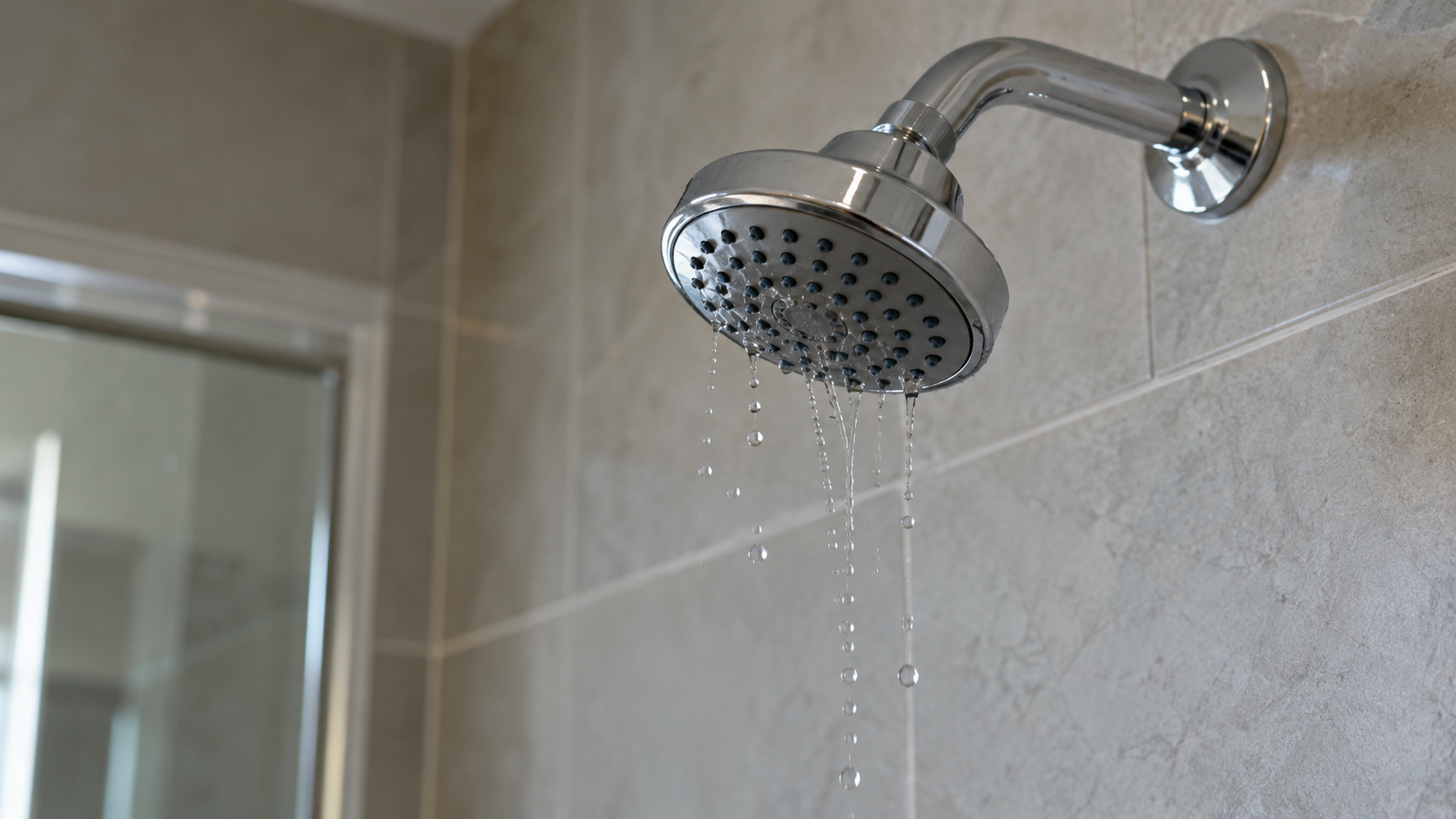
If your well only produces 1 gallon per minute (GPM), is that enough water for a house? For most modern homes, 1 GPM is too little to supply the house directly. A single shower can use more than twice that amount, and once you add a toilet flush, washing machine, another shower, or someone using the kitchen sink, household demand can quickly reach several times what a 1 GPM well is capable of supplying.
That doesn't necessarily mean the well is useless or that you need to drill a new one. In fact, a 1 GPM well may still produce a significant amount of water over the course of a day. The problem is that it produces that water far too slowly to keep up with the way a family actually uses water. A 1 GPM well may have enough total daily production, but it does not have enough instantaneous flow to comfortably supply a typical home.
For homeowners in this situation, the solution is usually not trying to force the well to produce water faster. Instead, the better approach is to collect the water slowly, store it, and then supply the house from that stored reserve at a normal household flow rate. That is exactly what systems like the Well Harvester® are designed to do.
Why 1 GPM Is Too Low for Normal Household Use
Think about how water is actually used inside a home. Your family doesn't use one gallon every minute, evenly spread throughout the entire day. There may be hours when almost no water is used at all, followed by a period when several fixtures and appliances are running at the same time.
A modern shower alone commonly uses around 2 gallons per minute or more. Two showers running at once can easily require around 4–5 GPM before anyone uses another fixture. Add a toilet, bathroom sink, dishwasher, or washing machine and household demand can climb even higher. For a family of four, peak water demand can easily reach 8–12 GPM when several fixtures are operating at once.
Now compare that to your well. The house may want 10 gallons in one minute while your well provides only one. That is a major mismatch. If the home is relying directly on the well and pressure tank, that missing water has to come from somewhere. Once the small amount of usable water stored in the pressure tank is depleted, the system becomes dependent on how quickly the well itself can replenish the water being used.
At only 1 GPM, that is not enough for normal high-demand household use. You may begin noticing weak pressure, running out of water during showers, having to wait between loads of laundry, avoiding simultaneous water use, or completely losing water until the well has time to recover. That is why a 1 GPM well should generally be thought of as a low-producing well that needs to be managed differently from a normal higher-yield well.
But Doesn't 1 GPM Add Up to a Lot of Water?
Yes, and this is where low-yield wells become interesting. One gallon per minute equals 60 gallons per hour. Theoretically, if a well could continuously maintain that production for 24 hours, it would equal 1,440 gallons per day.
That number is much higher than the amount of water most households actually use. A family of four may use roughly 320–400 gallons per day, depending on fixtures, habits, appliances, irrigation, and other water demands. So how can a 1 GPM well produce hundreds of gallons per day and still leave a family without enough water?
The answer is that the rate at which the water is produced does not match the rate at which the house consumes it. Imagine someone takes a 10-minute shower at 2.5 GPM. That shower uses approximately 25 gallons. During those same 10 minutes, a 1 GPM well has only produced approximately 10 gallons. The household has used water two and a half times faster than the well could replenish it.
Now add another shower or another fixture and the deficit becomes much larger. Over several hours, the well may be capable of replacing all that water, but the person taking the shower doesn't want to wait several hours. They need that water right now. That is the fundamental problem with a 1 GPM well.
A 1 GPM Well Has a Timing Problem
This is one of the most important concepts for homeowners with low-yield wells to understand. You may not actually have a total water shortage. You may have a timing problem.
The water is being produced, just not at the same time or speed that your family needs to use it. For example, imagine your household uses 350 gallons in a day. If your well can sustainably provide around 1 GPM for enough hours each day, the total amount of available water may be more than adequate.
But that doesn't help when four people are getting ready in the morning. Your household might use 50 or 75 gallons in a relatively short period of time. A 1 GPM well simply cannot replace that water quickly enough as it is being consumed.
The traditional solution would be to tell everyone to use less water at the same time. Don't shower while the washing machine is running. Don't run the dishwasher yet. Wait before taking another shower. Don't water outside today. Technically, that can make a low-producing well more manageable, but most homeowners don't want to organize their entire life around their well.
A better solution is to give the well time to collect water before the household needs it. That requires real water storage.
Why a Pressure Tank Doesn't Fix a 1 GPM Well
Many homeowners assume that installing a larger pressure tank will solve the problem. Unfortunately, a conventional pressure tank is not the same thing as a bulk water storage tank.
A pressure tank is primarily designed to maintain pressure and prevent the well pump from turning on and off every time someone opens a faucet. Even a pressure tank labeled as 80 gallons does not provide 80 gallons of usable stored water. Only a portion of the tank's total volume is available between normal pressure-switch settings.
Once that relatively small reserve is used, the system is once again relying on the well. If the well is only producing 1 GPM while the house wants 5, 8, or 10 GPM, the underlying problem has not changed.
This is why homeowners with low-yield wells often become frustrated after installing a larger pressure tank and discovering that they still run out of water. The system needs bulk water storage, not simply more pressure-tank capacity.
What a 1 GPM Well Really Needs
A low-producing well needs a way to separate when water is produced from when water is used. Instead of pumping water directly from the well into the house whenever someone opens a faucet, the well should be allowed to gradually fill a storage tank.
The well can produce water at its own sustainable rate. It might take hours to collect a few hundred gallons, and that is completely fine. Once that water is in storage, a separate booster pump can supply the home at a much higher flow rate.
Suddenly, the family is no longer trying to take a 10 GPM shower load from a 1 GPM well. They are taking water from a tank that already contains hundreds of gallons. Meanwhile, the well continues replenishing that tank in the background.
This completely changes how usable a 1 GPM well can become.
An Example: A Family of Four With a 1 GPM Well
Consider a family of four using approximately 350 gallons of water per day. Without meaningful water storage, their 1 GPM well has to respond directly to household demand. During busy mornings, the family may have two showers running, someone using a sink, and a toilet flushing.
Household demand might briefly reach 7 or 8 GPM while the well is still producing only 1 GPM. That means the household could be consuming water seven or eight times faster than the well is producing it. A pressure tank may help for a short period, but once that reserve is exhausted, the well cannot keep up.
Now put a few hundred gallons of water storage between the well and the house. Throughout the night, the well gradually fills the tank. In the morning, the family draws from stored water rather than directly from the 1 GPM source. The booster pump may supply several gallons per minute to the house while the well continues replenishing the tank at its slower rate.
After everyone leaves for work or school, household water use drops dramatically. The well now has several hours to refill the storage that was used that morning. By evening, the reserve can be ready for another period of heavier use.
The family didn't make the well produce more water. They simply stopped demanding that the well produce water at the exact moment they needed it.
The Well Harvester® Is Designed for This Exact Problem
This is where the Well Harvester® becomes especially valuable. A 1 GPM well is not just a tank-sizing problem. It is also a well-management problem.
Simply connecting a storage tank to a low-producing well does not automatically guarantee that the system will work properly. The well still needs to be pumped in a way that protects the available water source and gives the well time to recover when necessary.
The Well Harvester was designed specifically for low-yield, variable, and difficult-to-manage wells. Instead of expecting the well to keep up with household demand, the Well Harvester gradually collects the water the well is capable of producing and stores it in its 215-gallon storage tank.
When the well needs time to recover, the system can stop collecting water and allow it to rest before resuming operation. That is a major difference from simply running the well pump until the well runs out of water. The Well Harvester is designed to work with the production of the well rather than against it.
When your family needs water, the house is supplied from the stored reserve. The booster system can provide household water at up to 20 GPM and approximately 60 PSI, even though the well itself may only be producing around 1 GPM. That means your 1 GPM well can continue filling storage slowly while your family experiences normal household water pressure and flow.
If 215 gallons isn't enough storage for the household, additional storage can be added in 215-gallon increments. For many homeowners with a 1 GPM well, this is the difference between constantly managing water use and simply using water normally.
Why the Well Harvester Is Different From Just Adding a Tank

It is certainly possible to build a water storage system from separate tanks, pumps, floats, controls, and other components. But with a low-yield well, storing the water is only part of the challenge.
You also have to decide when the well pump should run, how aggressively the well should be pumped, when it needs to rest, how to prevent overpumping, and how to supply the house separately from the well. A basic storage system may rely on fixed controls that simply tell the well pump to turn on when the tank gets low.
The problem is that low-producing wells are not always consistent. A well that can produce 1 GPM today may perform differently during late summer. The recovery rate may change after extended pumping, and groundwater conditions can fluctuate throughout the year.
The Well Harvester was built around these changing conditions. Instead of treating the well like a constant water source, it manages the available production and stores the water for later household use. For someone with a 1 GPM well, that is much more important than simply owning a large tank.
How Much Storage Should You Have With a 1 GPM Well?
There is no single storage capacity that is right for every home. A two-person household may be comfortable with less storage than a family of six. A home with no irrigation may require less reserve than a property with a large garden, and a well that reliably produces around 1 GPM may need less reserve than one whose production fluctuates substantially throughout the year.
What matters is having enough stored water to get through your high-demand periods while giving the well enough time to replenish what was used.
For many households, the standard 215 gallons provided by the Well Harvester can create a substantial buffer. If the home needs more reserve, another 215-gallon tank can increase total storage to approximately 430 gallons. Additional storage can continue to be added when necessary.
That allows the storage system to grow with the household instead of requiring every homeowner to install an oversized tank from the beginning.
Can You Live With a 1 GPM Well Without a System Like This?
You can, but it may require significant changes in how you use water. Homeowners with low-producing wells often learn to avoid using several fixtures simultaneously. Laundry might be scheduled around showers. Irrigation may have to be limited. Family members may need to wait between showers.
In some cases, homeowners watch the clock or manually shut their well pump off to give the well time to recover. For a cabin or lightly used property, that may be acceptable. For a full-time family home, it can become frustrating very quickly.
The goal of adding storage and automatic well management is not simply to make the math work. It is to make the home feel like a normal home again. You should be able to take a shower while someone uses a sink. You should be able to run the washing machine without worrying that the next person will run out of water. Your family should not have to understand the recovery characteristics of the well just to get through the day.
That is what a properly designed low-yield well system is supposed to accomplish.
Could You Just Drill a New Well Instead?
Drilling another well is certainly an option, but it can be expensive, and there is no guarantee that another well will produce significantly more water. If the surrounding geology naturally produces low-yield wells, drilling deeper or drilling elsewhere on the property may encounter similar conditions.
Before abandoning a 1 GPM well, it makes sense to determine how much total water the well is actually capable of producing. If the well can sustainably provide enough total gallons for the household, then the existing source may already contain the water you need. You simply need a better way to use it.
That is where storage and well management can often make much more sense than drilling another hole and hoping for a better result.
When Even the Well Harvester Can't Create More Water
There is an important limitation to understand. The Well Harvester can help you collect, manage, store, and use the water your well produces, but it cannot create groundwater that isn't there.
If your household consistently uses 500 gallons per day but your well can only sustainably provide 200 gallons per day, adding storage cannot eliminate that long-term deficit. A larger storage tank may postpone the problem, but eventually the household will consume the reserve faster than the well can replace it.
Storage solves a production timing problem. It cannot permanently solve a true water-volume deficit.
That is why the Well Harvester works best when the well produces enough total water over time but produces it too slowly or inconsistently to directly meet household demand. A 1 GPM well is a great example of that type of situation. It may not be able to supply your house directly, but there may still be plenty of usable water available if it is collected correctly.
So, Is 1 GPM Enough Water for a House?
One gallon per minute is generally too low to directly supply a modern household. A shower by itself can use more water than the well is producing, and a busy family can demand five, eight, ten, or more gallons per minute during normal periods of household use.
Trying to operate a home directly from a 1 GPM well can mean low pressure, running out of water, waiting between showers, scheduling laundry, and constantly thinking about how much water is available. But that does not necessarily mean the well needs to be replaced.
A 1 GPM well can still produce a significant amount of water over several hours. If that water is collected and stored before the household needs it, the home's instantaneous demand no longer has to match the production rate of the well.
That is the problem the Well Harvester® is designed to solve. Instead of asking a 1 GPM well to behave like a 10 GPM well, the Well Harvester allows the well to produce water at the rate it is capable of producing. It collects that water, protects the well when it needs time to recover, stores the available supply, and then delivers that stored water to the house at normal household pressure and flow.
So if you've been told your well only produces 1 GPM, you should take that seriously. One GPM is too little for a typical home to comfortably rely on directly. But it does not automatically mean you need a new well.
You may already have enough water underground. You just need a system designed to collect it slowly and make it available quickly.
And that is exactly what the Well Harvester was built to do.